
Unique craftsmanship in cooking represents the deliberate mastery of technique, ingredient selection, and presentation that transforms a meal into a memorable experience. True culinary craftsmanship reveals itself through hand-selected seasonal produce, precision in execution, and the thoughtful adaptation of dishes to honor both tradition and individual preferences. This level of artistry separates exceptional catering from competent service, making it the defining quality guests remember long after an event concludes.
The foundation of unique craftsmanship begins with sourcing. Artisan caterers forge relationships with suppliers to secure the freshest ingredients, often selecting produce at peak ripeness and proteins at optimal quality. This commitment to provenance ensures that each component contributes its fullest flavor and texture to the finished dish.
Technique distinguishes the craftsperson from the cook. Years of training enable skilled chefs to execute complex preparations with consistency, whether crafting delicate sauces that require precise temperature control or achieving the perfect sear on premium cuts. These methods demand attention and experience that cannot be rushed or replicated through shortcuts.
Presentation elevates craftsmanship into art. Each plate becomes a canvas where color, height, and arrangement work together to create visual anticipation before the first bite. The plating itself communicates respect for the ingredients and the occasion.
Personalization completes the picture. Exceptional craftspeople accommodate dietary restrictions without compromise, adapting recipes to meet specific needs while maintaining the integrity of flavor and presentation. This flexibility demonstrates true mastery, as it requires deep understanding of ingredients and technique to substitute thoughtfully rather than simply omit.
The Foundation of Culinary Craftsmanship
Culinary craftsmanship transcends the simple act of preparing food. It represents a philosophy where every cut, every sear, every garnish is executed with intention and precision. While standard cooking delivers sustenance, unique craftsmanship delivers an experience, one that lingers in memory long after the final course.
The foundation begins with technique. Artisanal chefs spend years mastering fundamental methods that form the building blocks of exceptional cuisine. A perfectly emulsified sauce, the ideal sear on a protein, the delicate balance of seasoning, these aren’t accidents but the result of deliberate practice and deep understanding. Where conventional catering might rush through preparation to meet volume demands, craftsmen approach each dish as if it were their only creation of the day.
Attention to detail separates the adequate from the exceptional. An artisan chef notices the slight variations in oven temperature, the precise moment when herbs release their optimal aromatics, the exact thickness that allows a vegetable to maintain texture while absorbing complementary flavors. These micro-adjustments, invisible to guests but essential to the outcome, define craftsmanship.
This commitment to excellence extends beyond individual dishes to the entire dining narrative. Skilled chefs orchestrate flavors, textures, and temperatures across multiple courses, ensuring each element enhances rather than competes with others. They consider how the richness of one dish prepares the palate for the brightness of the next, how the weight of afternoon fare differs from evening elegance.
In artisanal catering, there are no shortcuts, no “good enough” compromises. Every plate reflects a chef’s dedication to their craft and respect for guests who will experience their work.
Fresh Ingredients as the Canvas
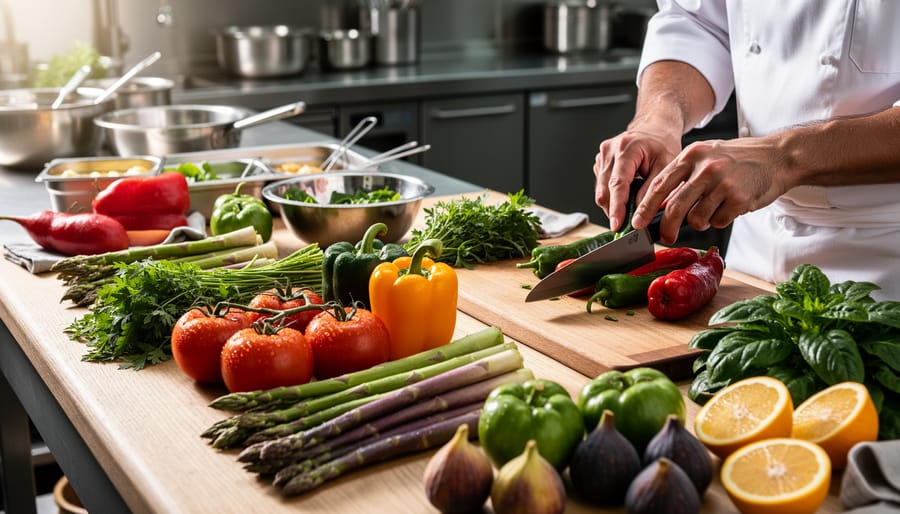
Unique craftsmanship in culinary artistry begins long before the chef reaches the kitchen, it starts at dawn markets, with artisan producers, and through relationships built over years of sourcing the finest seasonal ingredients. For the culinary artisan, ingredients aren’t merely components of a recipe; they’re the raw materials from which edible art emerges. A perfectly ripe heirloom tomato at its seasonal peak, wild-caught fish landed that morning, or herbs harvested within hours of preparation, these elements provide the foundation that allows a chef’s skill to truly shine.
The distinction between conventional and artisanal catering becomes immediately apparent in ingredient selection. While standard services often rely on year-round availability and shelf stability, true craftsmen understand that seasonality brings ingredients to their most expressive state. Spring asparagus possesses a delicate sweetness in April that no greenhouse substitute can replicate. Summer peaches arrive bursting with juice and fragrance that disappears within weeks. This commitment to seasonal sourcing requires flexibility, knowledge, and established relationships with trusted suppliers, qualities that distinguish dedicated artisans from those simply fulfilling orders.
Premium ingredients also provide the culinary canvas that showcases technical mastery. A pristine piece of fish needs minimal intervention to reveal its natural flavor, allowing the chef’s understanding of temperature, timing, and complementary elements to take center stage. Fresh vegetables retain the textural contrast that creates interest on the palate. When ingredients arrive at their peak, the artisan’s role transforms from masking deficiencies to highlighting inherent beauty, the truest expression of craftsmanship in cooking.
International Flavors Through an Artisan’s Lens
True craftsmanship in catering reveals itself most distinctly when a chef interprets global culinary traditions, not merely replicating recipes, but understanding the cultural context, mastering the techniques, and then applying both with creative precision. An artisan approaches international flavors with reverence for their origins while adapting them to create something genuinely unique for each event.
Consider how authentic French technique demands precise temperature control and timing for a perfect emulsification, or how traditional Japanese cuisine requires years of practice to achieve the delicate balance of umami flavors. The craftsman studies these methods deeply, understanding not just the steps but the principles behind them. This foundation allows creative adaptation without compromising authenticity, transforming a classic bouillabaisse into an elegant passed appetizer or reimagining Korean bibimbap as a sophisticated plated course that honors its roots while fitting the formal elegance of a wedding reception.
This approach differs fundamentally from fusion cooking that arbitrarily combines elements for novelty. The artisan respects each tradition’s integrity, selecting techniques and flavors that genuinely complement one another based on deeper culinary logic, perhaps pairing Mediterranean olive oil and herbs with Middle Eastern spices because both emphasize bright, aromatic profiles, or incorporating Asian steaming methods into European preparations when gentle cooking preserves ingredient quality.
Unique craftsmanship also means adapting international dishes to accommodate dietary needs without losing their essence. Creating an authentic-tasting Thai curry that meets vegan requirements, or developing gluten-free pasta for an Italian-inspired menu that maintains proper texture and flavor, requires technical mastery and problem-solving creativity that distinguishes artisanal work from standard catering.
The result transforms your event menu into a thoughtful culinary journey, each dish reflecting both global expertise and personal attention, where guests experience flavors from around the world prepared with the precision and care that defines genuine craftsmanship.
The Art of Personalization and Dietary Accommodation
True craftsmanship reveals itself most clearly when a chef must work within constraints. Anyone can execute a standard recipe, but adapting dishes for vegetarians, guests with celiac disease, or those observing kosher requirements while preserving the intended elegance requires genuine artistry. This demands technical mastery, creative problem-solving, and an unwavering commitment to quality, hallmarks of unique craftsmanship in modern catering.
Consider the challenge of creating a gluten-free pastry that maintains the delicate texture of its traditional counterpart, or crafting a vegan course that delivers the same depth and richness as one built on classic French techniques. These adaptations aren’t simple substitutions. They require understanding ingredient chemistry, knowing how flavors interact, and possessing the skill to reimagine a dish from its foundation while honoring its essence.
The craftsman approaches each dietary requirement as an opportunity rather than an obstacle. When a guest cannot consume dairy, the artisan chef doesn’t simply remove ingredients, they reconstruct the dish using alternative elements that preserve balance and visual appeal. Cashew cream might replace traditional dairy, carefully prepared to achieve the same silky consistency. Aquafaba could stand in for egg whites in a meringue, whipped to identical peaks through precise technique and timing.
This level of accommodation extends beyond allergies to embrace personal preferences and cultural practices. A skilled catering team remembers that one guest prefers lighter fare while another requests heartier portions. They note religious observances without requiring reminders. They design complete menus where restricted options match the sophistication of standard offerings, ensuring no guest feels they’re receiving a lesser experience.
The craftsmanship lies in making these adaptations invisible, in creating an event where every attendee enjoys equally exquisite cuisine, regardless of their individual needs.
Presentation as Culinary Expression
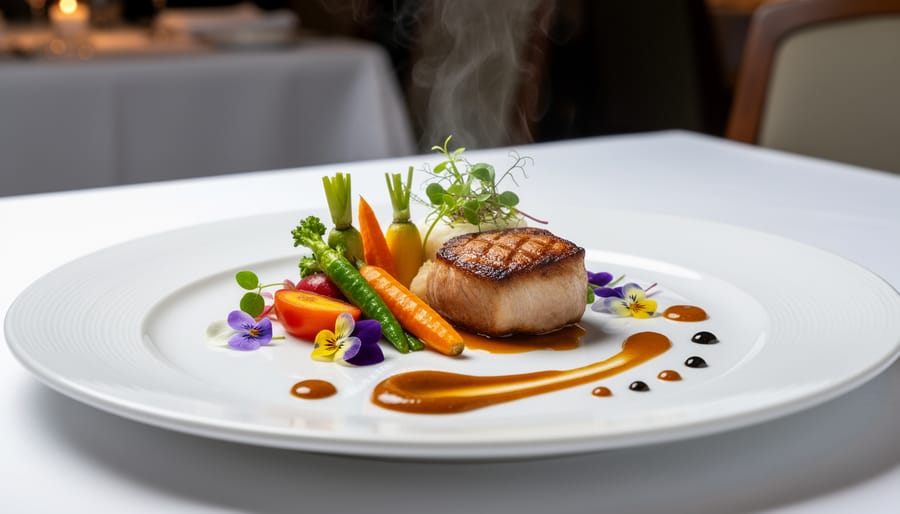
Before guests taste a single bite, visual presentation communicates the level of care and artistry invested in their meal. True culinary craftsmen understand that plating is not mere decoration, it’s an essential element of the dining experience that engages multiple senses simultaneously and sets expectations for the flavors to come.
The arrangement of each element on the plate follows principles refined through years of practice. Skilled chefs consider negative space as carefully as the food itself, allowing each component room to be appreciated individually while contributing to the composition as a whole. Color contrast draws the eye naturally across the plate, vibrant sauces against pristine proteins, fresh herbs providing pops of green against earthy grains, edible flowers adding unexpected visual interest without overwhelming the main ingredients.
Texture variation creates visual dimension that mirrors the sensory experience of eating. A smooth puree gains interest from crisp garnishes; delicate microgreens provide height above flat elements; sauce drizzles add movement and flow. These choices reflect deliberate thought about how the dish will be discovered as guests navigate it with their forks.
Attention to detail separates adequate presentation from genuine artistry. Every smudge wiped from the rim, every herb leaf placed with intention, every sauce droplet positioned precisely demonstrates respect for both the ingredients and those who will enjoy them. This meticulous approach transforms functional plating into culinary expression that honors the craftsmanship embedded in every previous step, from ingredient selection through preparation technique, creating a cohesive statement of excellence that guests remember long after the event concludes.
Recognizing Unique Craftsmanship in Your Catering Choice
Identifying authentic craftsmanship when choosing your caterer requires more than browsing menus and pricing sheets. True artisans reveal themselves through their approach to food, their questions about your vision, and the depth of their culinary knowledge.
Start your evaluation by asking potential caterers about their ingredient sourcing. A craftsman will speak passionately about relationships with local producers, seasonal considerations, and quality standards. Notice whether they reference specific suppliers or describe how they select proteins, produce, and specialty items. Generic answers about “fresh ingredients” differ significantly from detailed explanations about why they choose particular farms or purveyors.
Request a tasting, but observe beyond just flavor. Watch how dishes arrive at the table. Craftsmanship shows in temperature control, plating precision, and the care taken with each element. Ask the chef to walk you through their choices: why this garnish, that cooking method, or a particular flavor pairing. Artisans can articulate their decisions and the techniques behind each dish.
- Detailed questions about your event vision and guest preferences rather than standard package offerings
- Willingness to customize menus extensively and accommodate dietary needs creatively
- Portfolio showcasing diverse plating styles and international techniques
- Specific descriptions of cooking methods and ingredient preparation
- Transparent communication about what is realistic within your timeline and budget
Examine their portfolio carefully. Look for variety in techniques, creativity in presentation, and evidence of skill across different culinary traditions. A true craftsman demonstrates versatility while maintaining consistency in quality.
Finally, trust your instincts during conversations. Passionate artisans communicate genuine enthusiasm for their work. They view your event as an opportunity to create something memorable, not merely fulfill a contract. Their commitment to excellence should be evident in every interaction, from initial consultation through final planning details.
When you choose catering defined by unique craftsmanship, you’re not simply arranging food service, you’re commissioning an artisan to create moments your guests will remember long after the event concludes. The difference between standard catering and true culinary craftsmanship is the difference between background noise and a performance that captivates.
Every handcrafted dish, every thoughtfully selected ingredient, every detail of presentation communicates care and excellence to those you’ve gathered. Your wedding guests don’t just taste the food; they experience your commitment to quality. Corporate clients and colleagues recognize the sophistication and attention invested in their presence. Private celebration attendees feel genuinely honored by the artistry set before them.
In 2026, as event expectations continue rising, investing in authentic craftsmanship distinguishes your gathering from the forgettable. It signals that you value artistry, that you understand excellence, and that your guests deserve more than convention.
The culinary artisan transforms your vision into edible art. The lasting impression begins the moment your first guest notices that extraordinary attention to detail, and it endures as the memory they’ll share when recounting your unforgettable event.