
Roasting a whole turkey in the oven requires preheating to at least 325°F and cooking until the internal temperature reaches a safe minimum of 165°F throughout the thickest part of the breast, innermost wing, and innermost thigh. A 12-pound bird typically needs three to three and a half hours unstuffed, though timing varies by weight and whether you’ve added stuffing. This traditional roasting method delivers the golden, crackling skin and succulent meat that anchor holiday tables, transforming a simple bird into the centerpiece of celebration through careful attention to temperature, timing, and technique.
The same principles of fresh quality and precision we bring to every catered event apply to your home kitchen. Properly thawed poultry, accurate temperature monitoring, and patience during the resting period separate a competent roast from an exceptional one. Whether you’re preparing a modest eight-pound bird for an intimate gathering or a twenty-four-pound centerpiece for an extended family feast, understanding the interplay between oven heat, meat temperature, and cooking duration ensures both safety and superior flavor. The process begins well before the bird enters the oven, with thawing in the refrigerator at a rate of roughly 24 hours per four to five pounds, and culminates in a fifteen-minute rest before carving, allowing juices to redistribute and the meat to reach its peak texture and taste.
Essential Tools and Materials for Roasting Turkey
The right equipment transforms turkey roasting from a guessing game into a precise, repeatable process that delivers consistent, elegant results worthy of any celebration table.
Required Equipment
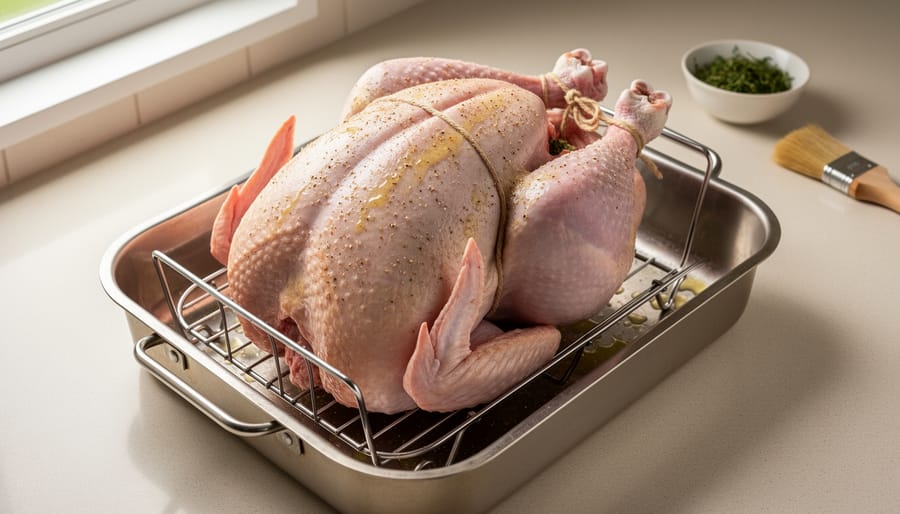
A shallow roasting pan with a sturdy rack forms the foundation of proper turkey roasting. The rack elevates the bird above drippings, allowing hot air to circulate underneath for even browning and preventing the bottom from steaming in accumulated juices. Choose a pan sized to your turkey, at least two inches wider on all sides, with handles substantial enough to support the combined weight of a loaded pan.
An accurate food thermometer is non-negotiable for food safety. This single tool verifies that your turkey has reached the safe minimum internal temperature of 165°F in all three critical locations: the thickest part of the breast, the innermost wing, and the innermost thigh. Digital instant-read thermometers provide the most reliable readings. Without this verification, even experienced cooks risk serving undercooked poultry or overcooking a perfectly good bird.
Complete Equipment List
- Shallow roasting pan (14×18 inches for birds up to 20 pounds)
- V-shaped or flat roasting rack that fits the pan
- Food thermometer (instant-read digital recommended)
- Basting brush or bulb baster for moisture and browning
- Kitchen twine for trussing legs (optional)
- Heavy-duty aluminum foil for tenting if needed
- Carving board with juice groove
- Sharp carving knife and kitchen shears
Quality tools reduce variables and allow you to focus on technique rather than compensating for inadequate equipment. The same attention to proper equipment that defines professional catering applies equally at home, where precision matters just as much as in any commercial kitchen.
Critical Safety Guidelines and Temperature Requirements
Food safety is non-negotiable when roasting a whole turkey. The USDA establishes a universal safe minimum internal temperature of 165°F measured with a thermometer in three critical locations: the thickest part of the breast, the innermost part of the wing, and the innermost part of the thigh. All three areas must reach 165°F to ensure harmful bacteria are destroyed throughout the bird.
This 165°F minimum applies universally, whether your turkey is stuffed or unstuffed. Confusion often arises from outdated recommendations or personal preference for higher temperatures, but the food safety standard remains consistent across preparation methods. The Safe minimum internal temperature chart confirms this requirement for all poultry products.
Beyond cooking temperatures, safe thawing practices prevent bacterial growth during preparation. Never thaw turkey at room temperature on the counter. For refrigerator thawing, plan approximately 24 hours for every four to five pounds of turkey weight. A 12-pound bird requires roughly three days in the refrigerator set at 40°F or below. Cold-water thawing (in its original wrapper, submerged in cold water changed every 30 minutes) offers a faster alternative but demands constant attention.
Proper storage extends these safety principles. Keep raw turkey refrigerated until you begin preparation, prevent cross-contamination by using separate cutting boards and utensils for raw poultry, and refrigerate leftovers within two hours of serving. Quality ingredients and meticulous technique create memorable meals only when food safety anchors every step from thawing through service.
Preparing Your Turkey: Thawing and Initial Setup
Thawing Timeline by Weight
Proper thawing is the foundation of a safely prepared turkey. Allow approximately 24 hours of refrigerator thawing time for every 4 to 5 pounds of turkey weight. A 12-pound bird requires roughly three days, while a 20-pound turkey needs four to five days in the refrigerator. Place the wrapped turkey on a tray to catch any drips, and keep your refrigerator at 40°F or below throughout the thawing period. Never thaw turkey at room temperature, as bacteria multiply rapidly in the temperature danger zone. Plan your timeline backward from your event date to ensure complete, safe defrosting before you begin preparation.
Seasoning and Flavor Enhancement
Once your turkey is properly thawed and prepared, seasoning transforms it from simple poultry into a centerpiece worthy of celebration. A classic dry rub combines kosher salt, freshly ground black pepper, dried thyme, and rosemary, massage this blend generously over the entire surface and inside the cavity for deep flavor penetration. For richer results, create herb butter by blending softened butter with minced fresh herbs (sage, parsley, tarragon), then carefully separate the turkey skin from the breast meat and spread the mixture directly onto the flesh; this technique bastes the meat from within as it roasts, ensuring moist, flavorful slices.
Aromatics placed in the cavity, halved onions, quartered lemons, garlic cloves, fresh herb sprigs, infuse subtle fragrance throughout the bird while contributing to pan drippings that form the foundation for elegant gravy. These gourmet ingredients need not be complex to deliver sophisticated results.
For guests with dietary restrictions, substitute unsalted butter with olive oil or dairy-free alternatives, omit salt entirely for sodium-restricted diets, and verify all herbs and spices are free from cross-contamination if allergen concerns exist. The same attention to fresh, quality ingredients and thoughtful accommodation applies whether you’re preparing one turkey or planning menus for larger gatherings.
Step-by-Step Roasting Process
Preheating and Oven Setup
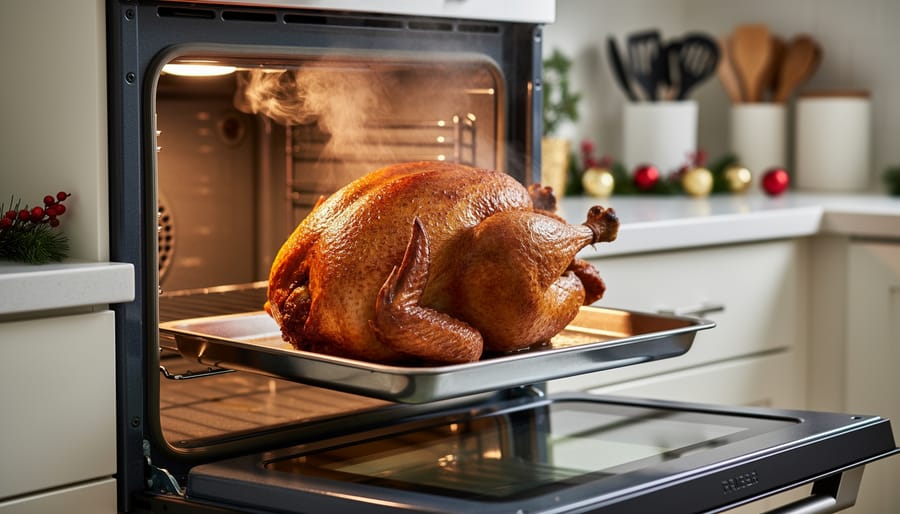
Begin by preheating your oven to 325°F (163°C), the minimum safe temperature for roasting poultry. Position the oven rack in the lower third of the cavity, allowing ample space above the turkey for proper air circulation and even browning. Remove any unnecessary racks to create an unobstructed path for heat. Ensure the oven has reached full temperature before placing the turkey inside; this typically requires 15 to 20 minutes of preheating. A properly heated oven and correct rack placement establish the foundation for uniform cooking, preventing hot spots that can lead to unevenly roasted meat or undercooked portions that fail to reach the critical 165°F internal temperature.
Positioning the Turkey in the Roasting Pan
Place the prepared turkey breast-side up on a roasting rack set inside a shallow roasting pan, ensuring air can circulate underneath for even heat distribution. Tuck the wing tips back and under the bird to prevent burning and create a compact shape for uniform roasting. If desired, tie the drumstick ends together with kitchen twine for a neater presentation, though this is optional and purely aesthetic. Position the pan in the lower third of your preheated 325°F oven without covering, tenting with aluminum foil is unnecessary at the start and can actually slow the browning process, though you may loosely tent the breast later if it’s browning too quickly before reaching the safe internal temperature of 165°F.
Roasting Time by Weight
Roasting times vary by turkey weight and whether you’ve chosen to stuff the bird. At 325°F, a 6-7 pound turkey typically requires 2-2½ hours unstuffed or 2¼, 2¾ hours stuffed. For 7-10 pounds, plan 2½, 3 hours unstuffed or 2¾, 3½ hours stuffed. Medium turkeys (10-18 pounds) need 3-3½ hours unstuffed or 3¾, 4½ hours stuffed, while larger birds (18-22 pounds) take 3½, 4 hours unstuffed or 4½, 5 hours stuffed. The largest turkeys (22-24 pounds) require 4-4½ hours unstuffed or 5-5½ hours stuffed, and 24-30 pound birds need 4½, 5 hours unstuffed or 5½, 6¼ hours stuffed.
These timings serve as planning guides, not absolute benchmarks. Oven calibration, starting temperature, and even the roasting pan’s depth affect cooking speed. Always verify doneness by measuring the internal temperature in all three critical locations, breast, innermost wing, and innermost thigh, confirming each reaches 165°F. This temperature standard ensures food safety regardless of size or stuffing status, so rely on your thermometer rather than the clock alone.
Monitoring and Basting During Roasting
Basting is optional but encourages a beautifully golden, glossy skin. Every 30 to 45 minutes, use a bulb baster or large spoon to draw pan juices over the breast and legs, working quickly to minimize heat loss. Limit oven door openings to preserve consistent temperature, frequent checks can extend cooking time and dry out the meat. During the final hour of roasting, begin monitoring internal temperature to avoid overcooking. Insert your food thermometer into the thickest part of the breast, innermost wing, and innermost thigh, ensuring each location reaches the safe minimum of 165°F before removing the turkey from the oven.
The Resting Period
Once your turkey reaches the safe internal temperature of 165°F, resist the urge to carve immediately. Transfer the bird to a serving platter and allow it to rest for a full 15 minutes before slicing. This brief pause is essential for redistributing the juices throughout the meat; carving too soon causes flavorful liquid to spill onto the cutting board rather than remain in each tender slice.
Tent the rested turkey loosely with aluminum foil to retain warmth without trapping steam, which can soften the golden skin you’ve worked to achieve. The gentle resting period ensures every portion, from breast to thigh, delivers the moist, succulent texture expected at refined gatherings. This simple step transforms a properly cooked turkey into an elegantly presented centerpiece worthy of your most memorable celebrations.
Verifying Doneness and Temperature Testing Technique
Visual cues like golden skin or clear juices might suggest a well-cooked turkey, but they aren’t reliable indicators of food safety. The only way to confirm your turkey is safe to serve is by checking its internal temperature with a food thermometer at three specific locations.
Each of these three spots must reach the safe minimum internal temperature of 165°F. Push the thermometer probe deep into the meat until you feel resistance from bone, then pull back slightly so you’re measuring the meat itself, not the bone’s heat. The breast is typically the quickest to cook, while the thigh often takes longest, so checking all three locations ensures the entire bird is safe.
If any reading falls below 165°F, return the turkey to the 325°F oven and continue roasting. Recheck every 15 minutes until all three locations hit the minimum threshold. This same precision in temperature verification reflects the attention to detail in culinary artistry and the standards essential when cooking for events where food safety cannot be compromised.
Don’t rely on pop-up timers alone. While they provide a general signal, they measure only one location and may not reflect the temperature throughout the bird. Use your own thermometer to verify doneness, and you’ll serve turkey that’s both safe and elegantly prepared.
Carving and Presentation for Elegant Service
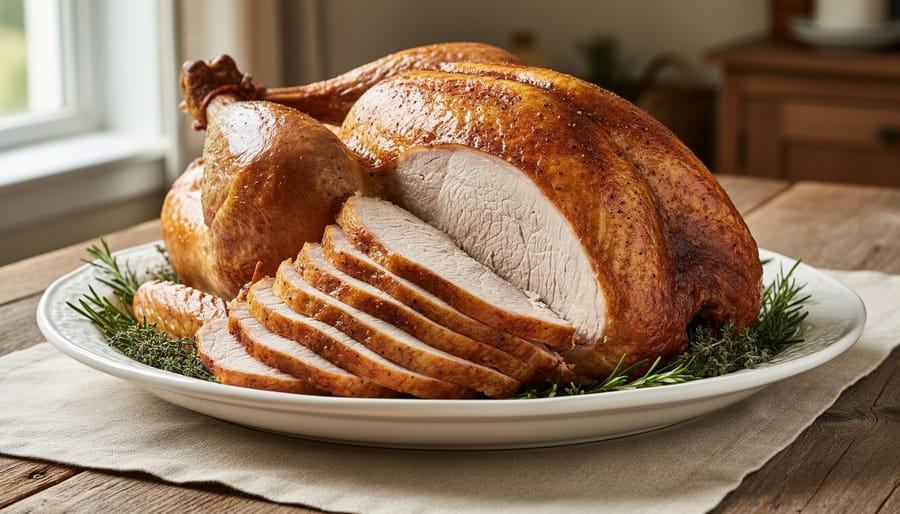
Once your turkey has rested for 15 minutes, transfer it to a clean cutting board for carving. Begin by removing the legs: slice through the skin between the thigh and breast, then pull the leg away from the body and cut through the joint. Separate the drumstick from the thigh at the knee joint. Next, remove the wings by cutting through the shoulder joints. For the breast meat, make a deep horizontal cut above the wing joint, then carve downward in thin, even slices parallel to the breastbone. Angle your knife slightly to create elegant, uniform pieces that showcase the golden skin and moist interior.
Presentation transforms a home-roasted turkey into a centerpiece worthy of special occasions. Arrange the carved slices on a warmed platter, alternating white and dark meat for visual appeal. Garnish with fresh herbs like rosemary, thyme, or sage, and consider adding roasted citrus halves or seasonal fruits for color. This attention to detail mirrors the refined plating standards seen in corporate buffet catering where every element contributes to the dining experience.
If you’re not serving immediately, hold the carved turkey at 140°F or above to maintain food safety. Cover loosely with foil to retain moisture without trapping steam that could soften the skin. This same precision ensures your home celebration delivers the quality and sophistication guests expect from professionally catered holiday gatherings.
Frequently Asked Questions About Oven-Roasted Turkey
Roasting a turkey for the first time often raises practical questions about technique, timing, and safety. These answers address the most common concerns, drawing on verified food safety standards and culinary best practices to help you achieve exceptional results.
Does stuffing affect the safe internal temperature required?
No. Whether your turkey is stuffed or unstuffed, the safe minimum internal temperature remains 165°F throughout the bird, measured in the thickest part of the breast, innermost wing, and innermost thigh. Stuffing does increase roasting time, often by 30 to 75 minutes depending on the turkey’s size, but it does not change the temperature threshold for food safety.
Should I cover the turkey with foil during roasting?
Covering the breast loosely with foil for the first half to two-thirds of roasting protects it from over-browning while the darker meat catches up. Remove the foil during the final hour to allow the skin to turn golden and crisp.
How do I prevent the breast meat from drying out?
Start with a properly thawed turkey (allow 24 hours per 4-5 pounds in the refrigerator), baste every 30 to 45 minutes with pan juices or melted butter, and remove the bird from the oven as soon as it reaches 165°F, overcooking is the primary cause of dry meat. The 15-minute resting period also allows juices to redistribute, ensuring moist slices.
Can I prepare parts of the process ahead of time?
Yes. Thaw the turkey completely in the refrigerator several days in advance, and if brining, you can brine up to 24 hours before roasting. Season the bird the night before and refrigerate it uncovered to help the skin dry, which promotes crispness. Roasting itself must happen on the day of service for optimal quality and safety.
Planning your timeline carefully makes the entire process smoother. If you have leftovers, reheat sliced turkey gently in a covered dish with a splash of broth at 325°F until it reaches 165°F internally, preserving both moisture and food safety. Proper storage in shallow containers within two hours of cooking ensures the turkey remains safe to enjoy for days after your celebration.
Mastering the art of oven-roasted turkey begins with four essential pillars: proper refrigerator thawing at 24 hours per 4-5 pounds, maintaining a consistent 325°F oven temperature, verifying the safe minimum internal temperature of 165°F in the breast, wing, and thigh, and allowing a full 15-minute rest before carving. These principles form the foundation of food safety and exceptional results, whether you’re preparing turkey for your family’s holiday table or appreciating the precision behind professionally catered celebrations.
The commitment to quality that defines memorable dining experiences starts with fresh ingredients and careful execution. When you apply these same standards in your own kitchen, you transform a traditional holiday centerpiece into something truly remarkable. Each step, from the gentle thaw to the final carving, reflects a dedication to both safety and elegance that elevates any gathering into an occasion worth savoring. The techniques you’ve learned here ensure that every turkey you roast achieves the golden perfection and succulent tenderness your guests deserve.