
Raw honey transforms catered events with unmatched depth and elegance, offering event hosts three distinct advantages: preserved natural enzymes that enhance flavor complexity, versatile applications across appetizers through desserts, and the ability to accommodate health-conscious guests without compromising sophistication. For premium events in 2026, raw honey has emerged as an essential ingredient among gourmet ingredients distinguished from processed varieties by its minimal filtration and absence of heat pasteurization.
The distinction matters considerably when planning menus for weddings, corporate gatherings, and private celebrations. Where conventional honey offers straightforward sweetness, raw varieties provide layered notes ranging from floral lavender undertones to robust buckwheat intensity. These nuanced profiles allow culinary teams to craft signature glazes for charcuterie boards, develop house vinaigrettes with unexpected dimension, and create memorable dessert presentations that guests discuss long after the event concludes.
Event planners and hosts who prioritize ingredient integrity find raw honey particularly valuable. It addresses multiple dietary considerations simultaneously: naturally gluten-free, suitable for most guests with refined sugar sensitivities, and offering antimicrobial properties that align with clean-eating preferences. This single ingredient can anchor an entire menu narrative, from welcoming cocktails featuring honey-infused spirits to farewell petit fours drizzled with amber-hued excellence.
The recipes that follow demonstrate professional techniques adapted for premium catering contexts, ensuring each application honors both the ingredient’s natural character and your event’s elevated standards.
What You’ll Need: Essential Ingredients and Tools for Raw Honey Recipes
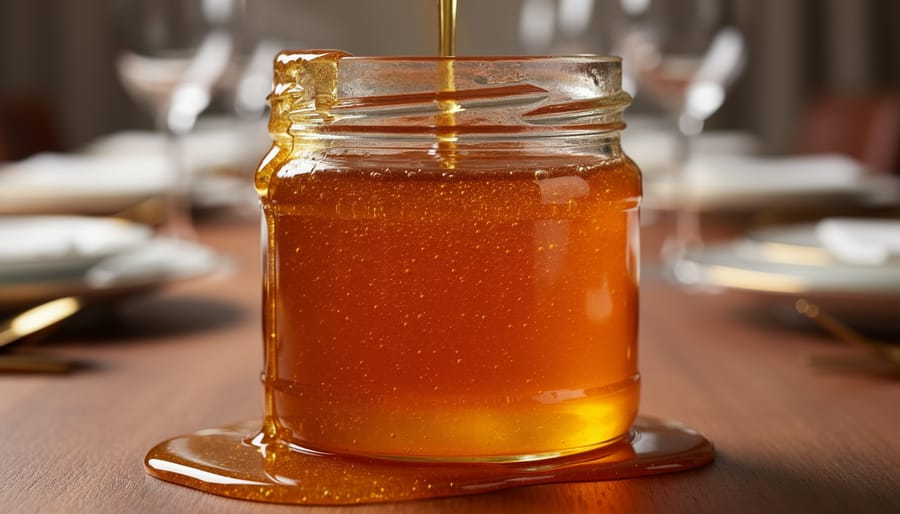
Successful raw honey recipes begin with meticulous selection of ingredients and tools that honor this exceptional ingredient’s natural properties. Premium ingredient pairing starts with sourcing authentic raw honey from trusted suppliers who harvest without heat processing or filtration, preserving the enzymes and pollen that distinguish raw honey from commercial alternatives.
The foundation of your raw honey pantry includes several key components:
- Raw honey varietals: wildflower for balanced sweetness, clover for mild applications, lavender for aromatic complexity, buckwheat for bold flavor profiles
- Fresh ingredients: aged balsamic vinegar, extra virgin olive oil, fresh citrus (Meyer lemons, blood oranges), artisanal cheeses, seasonal herbs (thyme, rosemary, basil)
- Specialized tools: wooden honey dippers for controlled drizzling, double boilers for gentle warming, silicone spatulas for sticky handling, digital thermometers to monitor heat below 95°F
- Measuring equipment: heated measuring cups for accurate portioning, warm water baths for softening crystallized honey, squeeze bottles for precise plating
Quality sourcing extends beyond the honey itself. Partner with local apiaries when possible, as single-source honey offers distinctive terroir that elevates your menu’s story. Each varietal brings unique characteristics: lighter honeys like acacia maintain liquid consistency longer, while darker varieties like chestnut deliver mineral notes that complement savory applications.
Your toolkit should accommodate raw honey’s tendency to crystallize naturally, which signals authenticity rather than defect. Warming stations at serving temperature, not cooking temperature, keep honey flowing without compromising its raw properties. Invest in multiple containers of varying sizes, allowing you to work with smaller portions while keeping bulk supplies properly sealed. Wide-mouth glass jars simplify access, and labels noting harvest date and floral source help you match specific honeys to appropriate recipes throughout your event planning process.
Important Considerations When Working with Raw Honey
Working with raw honey in a professional catering environment demands attention to detail that goes beyond standard ingredient handling. The very properties that make raw honey exceptional, its active enzymes, unfiltered pollen, and natural composition, require specific protocols to preserve quality and ensure guest safety throughout your event.
Temperature control stands as your first priority. Raw honey’s beneficial enzymes begin breaking down above 118°F, and heat reduces honey enzymes that distinguish it from processed alternatives. When incorporating honey into warm dishes like glazes or dressings, add it after removing the dish from direct heat, or keep cooking temperatures below this threshold. For cold applications, drizzles over burrata, dessert accents, or vinaigrettes, raw honey shines without compromise.
Storage protocols protect both flavor and safety. Keep raw honey sealed in a cool, dark location, never refrigerated, cold temperatures accelerate crystallization, which while harmless can complicate service timing. Check moisture content if honey appears unusually thin; properly harvested raw honey with under 18% moisture resists fermentation. For events spanning multiple courses, portion honey into smaller containers to minimize temperature fluctuations and contamination.
Allergen management requires proactive communication. Raw honey contains pollen traces that may trigger reactions in guests with severe pollen allergies. Prepare dedicated utensils for honey service to prevent cross-contamination with nuts, dairy, or gluten if you’re accommodating multiple dietary restrictions. Vegans typically avoid honey; have a high-quality maple syrup or date syrup alternative ready for guests who request it. Clear ingredient disclosure transforms potential concerns into confident hospitality.
Step-by-Step: Crafting Signature Raw Honey Dishes
Preparing the Base: Raw Honey Glazed Salmon with Citrus
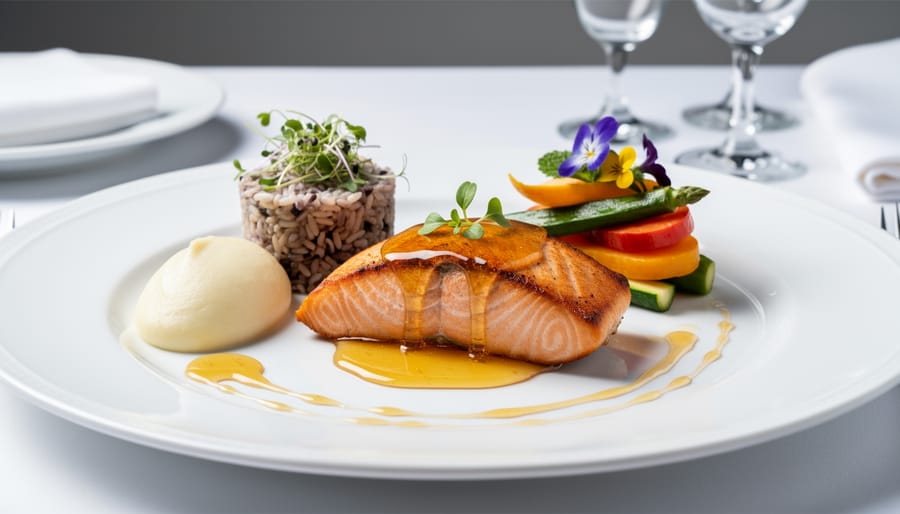
Begin by selecting fresh salmon fillets, preferably wild-caught for optimal flavor and texture. Pat each piece dry with paper towels and season lightly with sea salt and cracked black pepper, allowing the fish to reach room temperature for even cooking.
For the glaze, combine three tablespoons of raw honey with freshly squeezed citrus juice, a blend of orange and lemon works beautifully. Add a touch of minced garlic, a teaspoon of Dijon mustard, and a whisper of grated ginger. Whisk until emulsified, preserving the honey’s enzymes by keeping it at room temperature throughout preparation.
Heat a cast-iron skillet over medium heat with a drizzle of olive oil. Sear the salmon skin-side down for four minutes until the skin crisps and releases naturally. Flip carefully, then reduce heat to medium-low. This gentler temperature is crucial, excessive heat destroys raw honey’s beneficial properties.
Brush the glaze generously over each fillet during the final two minutes of cooking, allowing it to caramelize slightly without burning. Remove from heat once the salmon reaches medium doneness; the residual warmth will continue developing the glaze’s complexity.
For plating worthy of culinary artistry arrange the elegant seafood over a bed of wilted greens or roasted vegetables. Drizzle remaining raw honey glaze around the plate’s perimeter and garnish with citrus supremes and fresh herbs.
Elegant Starters: Honey-Drizzled Burrata with Fresh Herbs
Start with room-temperature burrata, fresh, high-quality cheese with a creamy interior that will blend seamlessly with the honey. Remove the burrata from its brine about 20 minutes before assembly so the cheese releases its moisture naturally and achieves the ideal consistency for plating.
Arrange each burrata ball on a pristine white plate or small serving dish, gently tearing it open at the top to reveal the stracciatella center. The exposed cream provides a canvas for the honey to pool and mingle with the cheese.
Drizzle raw honey in a thin, deliberate stream across the torn burrata, allowing it to settle into the crevices. Use approximately one teaspoon per serving, enough to enhance without overwhelming the delicate dairy flavors. The honey’s natural viscosity creates visual interest as it flows over the cheese.
Scatter fresh herbs immediately after the honey application. Torn basil leaves, delicate microgreens, or snipped chives work beautifully, adding color contrast and aromatic complexity. Add a light sprinkle of flaked sea salt and a crack of black pepper to elevate the flavor profile.
For passed service, assemble these appetizers no more than ten minutes before guests arrive, preventing the cheese from weeping or the honey from absorbing too much moisture. Present on small tasting spoons or crostini for easy handling at standing receptions.
Versatile Dressings: Raw Honey Vinaigrette for Artisan Salads
Begin with three parts raw honey to one part high-quality vinegar, champagne vinegar works beautifully for its delicate acidity, though apple cider vinegar adds a rustic note. Place the honey in a mixing bowl and drizzle in the vinegar slowly while whisking continuously. This gradual incorporation prevents the honey from clumping.
Once the vinegar fully dissolves into the honey, stream in extra virgin olive oil at a three-to-one ratio to the vinegar amount. Maintain a steady whisk as you pour. The mixture should transform from translucent to creamy, with a slight sheen indicating proper emulsification. If the dressing appears separated, add a teaspoon of Dijon mustard and whisk vigorously, the mustard acts as a natural emulsifier.
Season with fine sea salt and freshly cracked black pepper, adjusting to taste. For events featuring delicate greens like butter lettuce or mizuna, reduce the vinegar slightly to preserve the vegetables’ subtle flavors.
The vinaigrette naturally accommodates dietary restrictions. It contains no gluten or animal products beyond the honey itself. For strict vegan menus, substitute the raw honey with agave nectar using the same proportions, though you’ll sacrifice honey’s complex floral notes.
Store the dressing at room temperature for up to four hours before service. If crystallization occurs, warm the container briefly in your hands while swirling gently.
Sweet Finishes: Raw Honey Dessert Accents
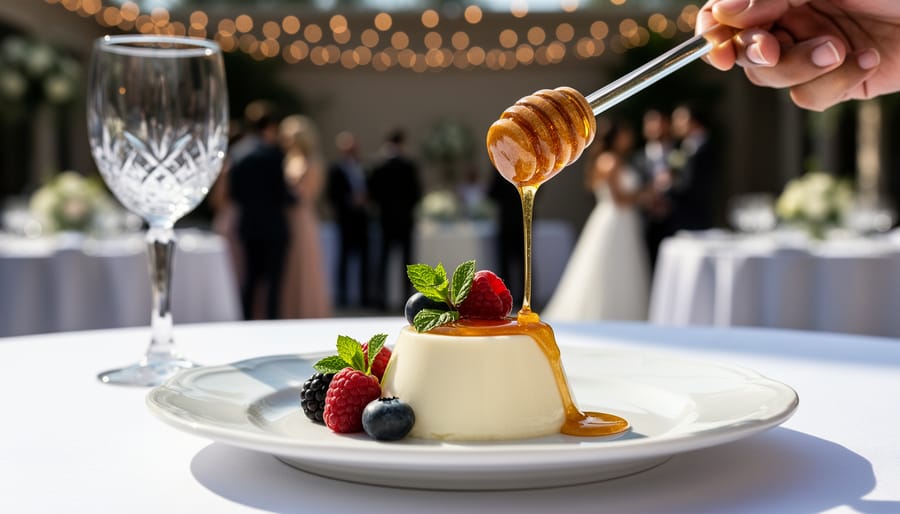
Raw honey transforms dessert presentations into memorable finale courses without requiring heat that would destroy its delicate enzymes and complex flavor profile. For a classic panna cotta, wait until plates reach the table before drizzling honey in a delicate spiral from the center outward, using a squeeze bottle for precise control. This preserves the honey’s raw properties while creating visual drama.
Honey-sweetened mascarpone requires gentle folding rather than vigorous whipping. Combine room-temperature mascarpone with raw honey using a silicone spatula, incorporating just until swirls disappear. The mixture holds its structure beautifully when piped onto fruit tarts or served alongside poached pears, and the mascarpone’s richness balances honey’s intensity without additional sweeteners.
Raw honey tuiles present the most technical challenge. Spread a thin film of raw honey onto parchment paper, then dehydrate at extremely low temperature (no higher than 115°F) for several hours until crisp. These translucent garnishes shatter delicately and showcase honey’s natural amber tones. For events, prepare tuiles the morning of service and store them in airtight containers with silica packets. Each technique prioritizes honey’s integrity while delivering the refined presentation premium catering demands.
Testing Your Results: How to Know Your Raw Honey Dishes Succeeded
Evaluating your raw honey dishes before service ensures they meet the refined standards your guests expect. Start with a flavor balance check: the honey’s sweetness should complement, not dominate, the other ingredients. Taste the glazed salmon or vinaigrette at room temperature, you should detect the honey’s floral notes alongside the dish’s savory or acidic elements, with neither overwhelming the palate. If the honey flavor feels cloying, balance it with a squeeze of fresh lemon or a pinch of sea salt.
Visual presentation tells an immediate story about quality. Raw honey should glisten without appearing thick or crystallized on the plate. For drizzled applications like burrata or desserts, the honey should flow in clean, elegant lines rather than forming cloudy pools. If crystallization has occurred, gently warm the honey in a water bath between 95-105°F to restore its liquid consistency without destroying beneficial enzymes.
Texture evaluation matters especially for dressings and glazes. A properly emulsified honey vinaigrette clings lightly to greens without separating into oily puddles at the bottom of the bowl. Glazes should coat proteins with a thin, lustrous layer that doesn’t slide off during plating. If your dressing separates, whisk in a teaspoon of Dijon mustard to stabilize the emulsion.
Assess each dish against these quality benchmarks:
- Balanced sweet-savory profile where honey enhances rather than masks other flavors
- Preserved honey aroma, a subtle floral or botanical scent indicating raw properties remain intact
- Proper glaze consistency that adheres without appearing heavy or sticky
- Visual appeal with honey providing shine and color contrast on the plate
- Positive guest response indicators like clean plates and requests for recipes
During service, watch for immediate feedback cues. Guests pausing to savor a bite or asking about ingredients signals success. If sweetness concerns arise, offer a palate cleanser between courses, sparkling water with cucumber or a simple green salad resets taste perception. Document what works for each event size and guest profile, building a reference guide for future catering projects.
Scaling Raw Honey Recipes for Events of Every Size
Adapting your raw honey recipes from intimate gatherings to grand celebrations requires strategic planning that maintains the ingredient’s integrity while meeting event-specific demands.
For dinner parties of eight to twelve guests, prepare components within four hours of service. Mix vinaigrettes just before plating to preserve emulsion, and keep raw honey at room temperature in squeeze bottles for precise drizzling. This scale allows for last-minute adjustments and personalized presentation that showcases the honey’s natural variations.
Corporate luncheons serving twenty-five to seventy-five demand advance batching with quality controls. Prepare glazes and dressings the morning of service, storing them in insulated containers that prevent temperature fluctuations. Portion honey-drizzled burrata on individual plates thirty minutes before guests arrive, covering with damp cloths to maintain moisture. For buffet service, station attendants can apply honey drizzles tableside, creating theater while ensuring proper distribution.
Wedding receptions for one hundred or more require systematic execution. Scale recipes in tested batches rather than multiplying single portions, this prevents ratio errors and maintains consistency. Prepare salmon glaze in five-pound increments, labeling each batch with preparation time. Store raw honey in warming cabinets set between 95-100°F to prevent crystallization without destroying enzymes.
Seasonal adaptation elevates these recipes beyond standard offerings. Spring events benefit from delicate acacia honey with strawberry garnishes, while autumn celebrations shine with darker buckwheat honey paired with roasted pears. Winter menus accommodate dietary restrictions by offering honey-sweetened alternatives to sugar-based desserts.
Create preparation timelines that account for honey’s unique properties: it doesn’t spoil but does crystallize. Brief your service staff on rewarming techniques using warm water baths, never microwaves, ensuring every guest experiences the honey’s intended liquid silk texture.
Common Questions About Using Raw Honey in Catering
What’s the difference between raw and processed honey for recipes?
Raw honey retains natural enzymes, pollen, and complex flavor notes that pasteurized honey loses during heating and filtration. This creates more nuanced taste profiles in finished dishes and preserves beneficial properties that appeal to health-conscious guests.
Can raw honey accommodate vegan guests?
Raw honey is an animal-derived product and does not align with vegan dietary principles. For vegan guests, substitute with maple syrup or agave nectar in your recipes while maintaining similar viscosity and sweetness levels.
How should raw honey be stored before an event?
Store raw honey at room temperature in sealed containers away from direct sunlight. Avoid refrigeration, which accelerates crystallization, and keep it away from heat sources that can degrade enzymes and alter flavor profiles.
How do I prevent crystallization during service?
Warm honey gently in a water bath at temperatures below 40°C before plating, and keep serving vessels at room temperature rather than chilled. If crystallization occurs, gentle warming restores smooth texture without compromising raw properties.
Understanding how raw honey behaves in professional settings helps you make confident decisions about incorporating it into your event culinary craft. Many hosts wonder about honey varietals for specific dishes, lighter varieties like acacia and clover offer delicate sweetness that complements seafood and soft cheeses, while robust buckwheat or chestnut honey adds depth to game meats and aged cheeses. The choice depends on your menu’s flavor architecture and the balance you want to achieve.
Cost considerations often arise when planning menus around premium ingredients. Raw honey commands higher prices than processed alternatives due to minimal processing and small-batch production, but its concentrated flavor means you need less per serving. For large events, purchasing directly from local apiaries often yields better value while supporting regional producers whose honey reflects your area’s distinctive floral character.
Raw honey transforms ordinary dishes into extraordinary culinary experiences, making it an essential ingredient for hosts who refuse to settle for predictable menus. The recipes we’ve explored demonstrate how this single, natural element can elevate every course, from appetizers that captivate guests upon arrival to desserts that leave lasting impressions long after the final bite.
The beauty of working with raw honey lies in its versatility and authenticity. When you choose honey-based recipes for your events, you’re not just selecting dishes; you’re making a statement about quality and care that resonates with discerning guests. Each drizzle, glaze, and vinaigrette carries the story of artisanal craftsmanship and your commitment to exceptional dining.
Whether you’re planning an intimate gathering or a grand celebration, raw honey offers endless possibilities for creating menus that reflect sophistication and thoughtfulness. As you consider your next event, think beyond standard offerings and embrace ingredients that showcase true culinary artistry. Premium catering services that prioritize fresh, artisanal ingredients can help you bring these refined honey creations to life, ensuring every detail aligns with your vision for an unforgettable occasion.